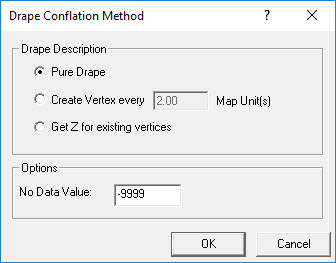
About the Drape Description
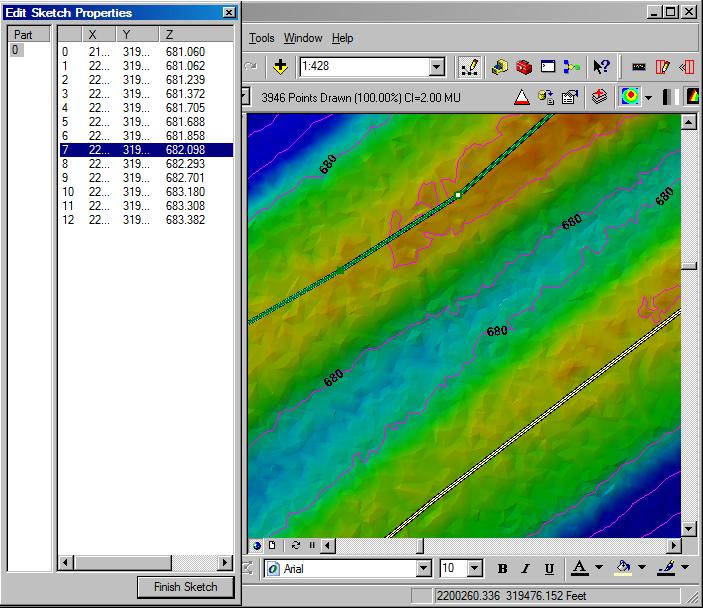
When a drape is performed over the LIDAR surface, three methods exist which define how the vertices within the output geometry are compiled: Pure Drape, Create Vertex every X Map Unit(s), and Get Z for existing vertices.The Pure Drape option creates a vertex in the output geometry for every intersection the input geometry makes with the triangulated LIDAR surface. The pure drape option best models the LIDAR surface within the output geometry. However, the pure drape option can result in massive amounts of vertices used in the output geometry which can result in difficulties of the geometry being used with other software packages. It is best to test the output of this option first before proceeding with more time consuming operations.
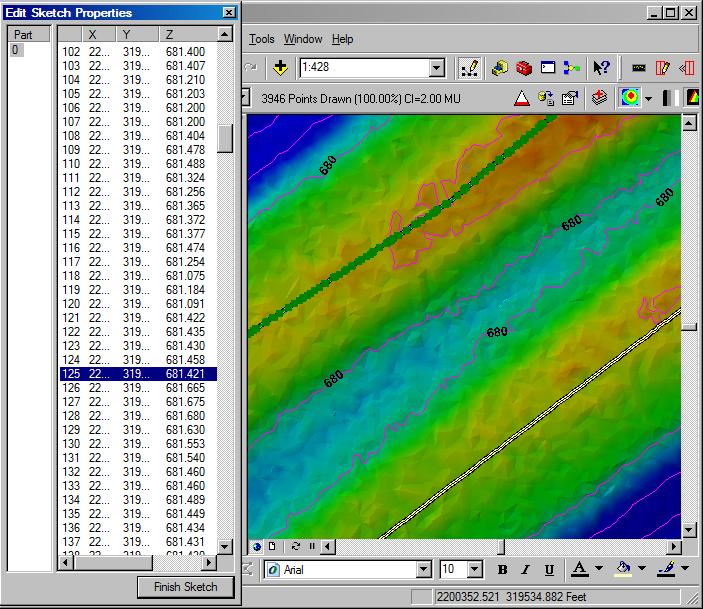
The Create Vertex every X Map Unit(s) option creates a new vertex in the output geometry every X map units. Each vertex in the output geometry is assigned the elevation of the LIDAR surface directly beneath the vertex.
Picture of an Example of using Create Vertex... option
Drape using 'Create Vertex every 5.0 Map Unit(s)' option (195 Vertices)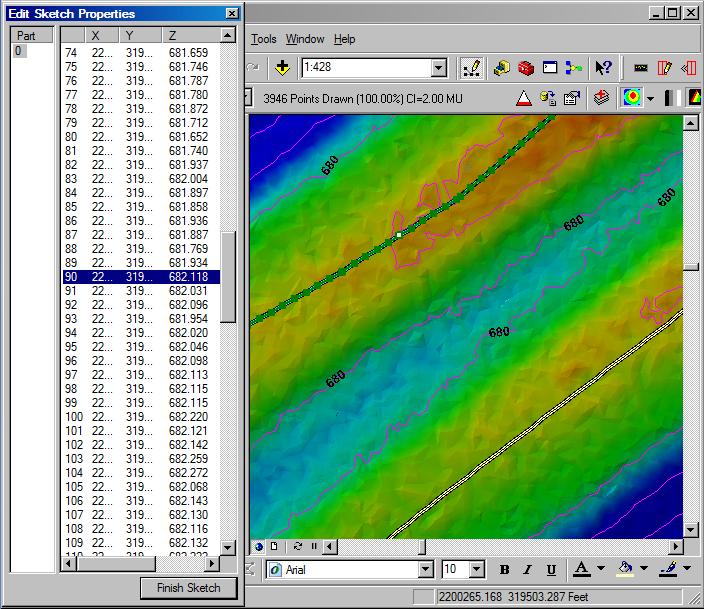
The Get Z for existing vertices option does not create new vertices within the output geometry. The method assigns an elevation from the LIDAR surface to the existing vertices. Note: The result of this option is the same result obtained from using the 'Surface Z' option in the Summarize Z values conflation method.