This article will define the minimum vehicle and roof rack requirements for operating GeoCue TrueView Mobile Mapping Systems. The intent is to ensure mechanical stability, sensor performance, and safe operation under real-world driving conditions.
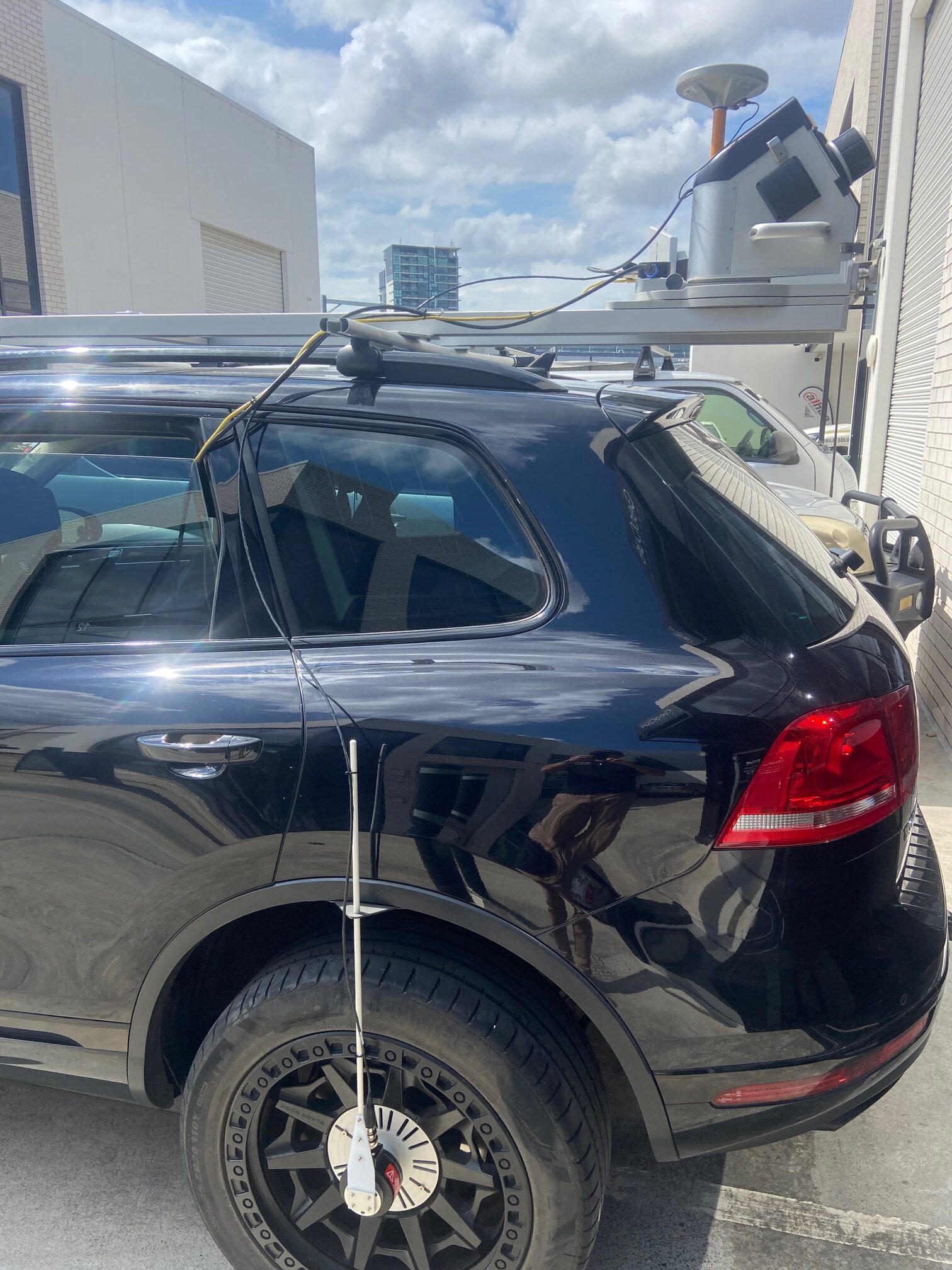
System Mass and Design Load
The TrueView Mobile Mapping System has an approximate mass of 28 kg, excluding mounting hardware and cabling.
Due to dynamic loads encountered during vehicle operation (acceleration, braking, road irregularities, wind loading), the mounting system shall be designed using an appropriate safety factor.
Minimum requirements
- Vehicle OEM roof load rating: ≥ 75 kg
- Minimum dynamic safety factor: ≥ 2.0 × system mass
- Effective design load (including mounts and cabling): ≥ 55–60 kg
The vehicle manufacturer’s specified roof load rating shall not be exceeded.
Roof Rack Type and Construction
The roof rack shall provide a rigid, non-compliant structural interface between the wehicle body and the sensor mounting assembly.
Preferred roof rack systems
- T-slot compatible roof racks (strongly preferred)
- Structural aluminum or steel crossbars
- Rectangular or square cross-section profiles
- Direct mounting to OEM roof hard points or integrated roof tracks
- Utility-grade or commercial-grade rack systems
T-slot compatible roof racks are preferred because they provide:
- Positive mechanical retention
- Improved lateral and torsional stiffness
- Secure attachment of machined mounting plates
- Reduced risk of slippage under dynamic loading
Roof rack systems not suitable
- Aerodynamic or wing-profile crossbars
- Plastic or composite load-bearing elements
- Consumer roof racks relying solely on clamp-style attachment
- Roof racks incorporating rubber isolation, compliant bushings, or vibration dampers
Structural Rigidity Requirements
The roof rack and mounting structure shall behave as a rigid extension of the vehicle body.
- No perceptible flexing shall be present under manual force or vehicle vibration
- Elastic or vibration-isolating elements (rubber mounts, silent blocks, springs) are
not permitted.
Crossbar Configuration and Mounting Interface
- Minimum of two crossbars required
- Three crossbars recommended for improved torsional stiffness
- Minimum recommended crossbar spacing: 700 mm
- Sensor mounting plate shall be rigidly attached to all supporting crossbars
- Use of a solid aluminum mounting plate (5–8 mm thickness typical) is
recommended
Sensor Position on Vehicle
The TrueView system shall be installed:
- Centered laterally on the vehicle
- Near the longitudinal center of the roof where practical
- With unobstructed 360° LiDAR field of view
- Positioned to avoid reflections from vehicle roof surfaces into cameras
Final lever-arm offsets and sensor alignment shall be measured after installation.
Vehicle Suitability
Recommended vehicle types
- Mid-size and full-size SUVs
- Pickup trucks with reinforced roof structures or approved bed-mounted rack
systems - Vans with certified roof load capacity
Vehicles generally not suitable
- Compact sedans
- Vehicles with OEM roof load ratings below 50 kg
- Vehicles with unsupported panoramic glass roofs
Responsibility and Verification
It is the responsibility of the system operator or vehicle owner to ensure that:
- The vehicle and roof rack meet all stated requirements
- Installation complies with vehicle manufacturer specifications
- The mounting system is inspected prior to operation
Failure to meet these requirements my result in degraded system performance or damage to the system.